
Finding and Testing Your Solar Emergency Shutdown Switch
During a house fire or utility emergency, crews look for a labeled switch that stops solar equipment from feeding the building. Many homeowners never learn where that switch lives until someone in uniform asks on the driveway. Handover day is your chance to locate it, read the label from the approach path, and watch a licensed installer confirm it works.
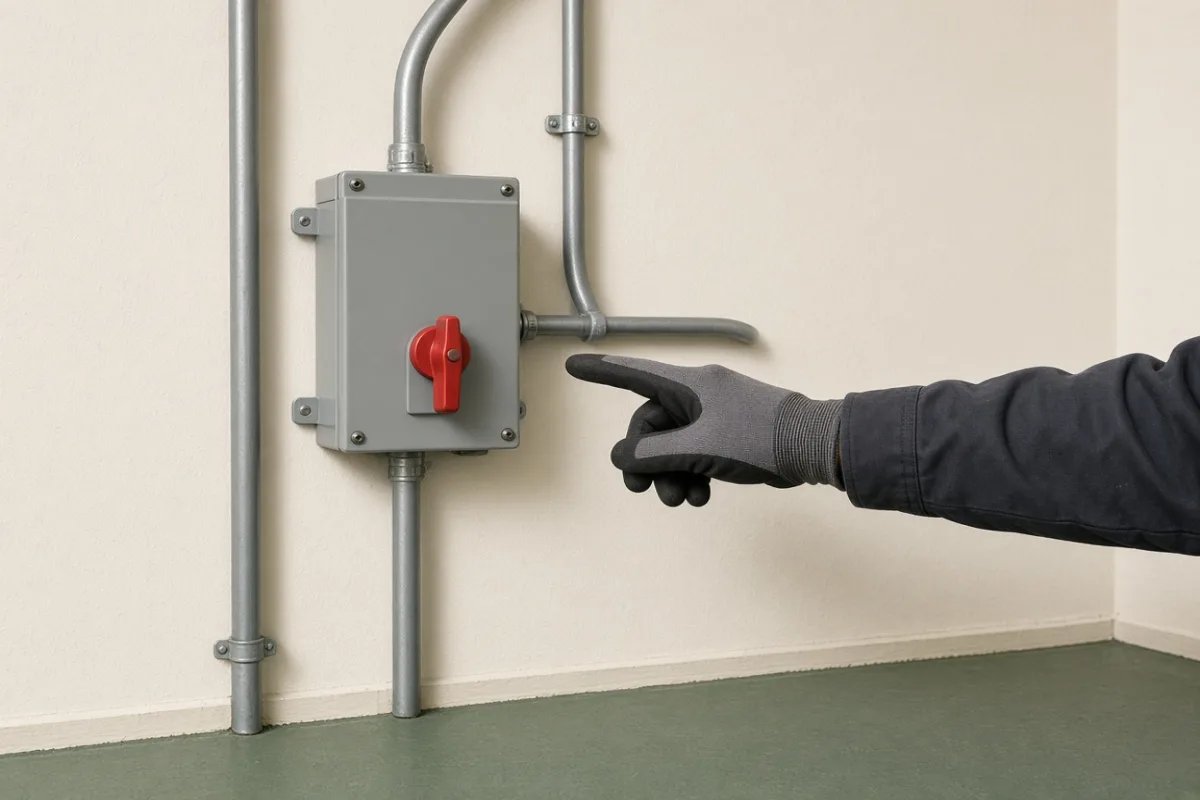
Where the switch usually hides
Code and local practice push the emergency disconnect toward places first responders can reach without climbing the roof. On many residential jobs, that means a garage interior wall within sight of the main entry door, an exterior wall near the meter, or a utility alcove beside the inverter. Some jurisdictions allow a combined rapid-shutdown initiator at the array edge instead of a separate wall switch — your single-line diagram should spell out which design you received.
If your installer mentions shutdown during the walkthrough but never walks you to the physical device, ask to pause the paperwork until you stand in front of it. A switch that exists only on paper does not help a firefighter who arrives at night with a flashlight.
Labels that fail the approach-path test
The label matters as much as the handle. Responders identify solar disconnects by wording such as "Photovoltaic System Disconnect" or "Solar AC Disconnect," often with red background coloring. Common problems we hear about from readers:
- Label mounted on the hinge side so it faces the wall when the door is open
- Text readable only from inside a locked utility closet responders cannot enter quickly
- Handwritten tape covering factory wording, peeling after the first heat cycle
- Multiple switches in a row without arrows showing which one controls solar versus other circuits
Stand where a stranger would approach from the driveway or alley and confirm you can read the label without touching the enclosure. If you cannot, ask the installer to relocate or supplement the marking before acceptance.
What "off" should look like on your equipment
You should not operate the disconnect yourself during handover unless your installer instructs you and confirms it is safe for the current weather and system state. Instead, watch a licensed technician perform the sequence and narrate what changes on the inverter display, production meter, and any monitoring app tied to the site.
During that demonstration, note:
- Whether inverter status LEDs or screen messages shift to a standby or fault state within the time your jurisdiction expects
- Whether ac output at the production meter drops while the switch remains open
- How long the inverter takes to resume after the switch returns to the on position on a sunny day
- Whether any battery equipment follows a separate shutdown path you must also know about
Cloud cover can hide production drops. In that case, ask the installer to explain idle-state readings you should expect instead of assuming you will remember numbers from a dim garage screen.
Rapid shutdown versus ac disconnect
Newer systems may include module-level rapid shutdown that reduces dc voltage on the roof when a separate initiator is activated. That function is related to but not identical to opening the ac disconnect at the inverter. Fire departments may ask for both concepts to be labeled clearly. If your contract mentions rapid shutdown, confirm where the initiator lives and whether it is the same handle as the ac disconnect or a second device elsewhere on the building.
Mixing up the two during an emergency wastes minutes. A one-minute explanation on handover day prevents that confusion when stress is high and visibility is low.
A utility liaison once told us crews do not need homeowners present — they need a switch they can find in ten seconds while smoke is visible. Your job on acceptance day is to make that search unnecessary by knowing the location yourself and fixing labels that hide in plain sight.
When the switch fails the handover test
Delay signing if the handle feels loose, if the enclosure shows burn marks or moisture inside, if the switch trips back on its own, or if the inverter continues exporting power while the disconnect is open. Those conditions require diagnosis by a licensed electrician, not a quick note on the acceptance form.
Also pause when the demonstrated shutdown path does not match your single-line diagram. Diagrams get updated during construction; the switch location should reflect the final build, not an early permit sketch. Resolve mismatches while the crew that mounted the equipment is still accountable on your property.